
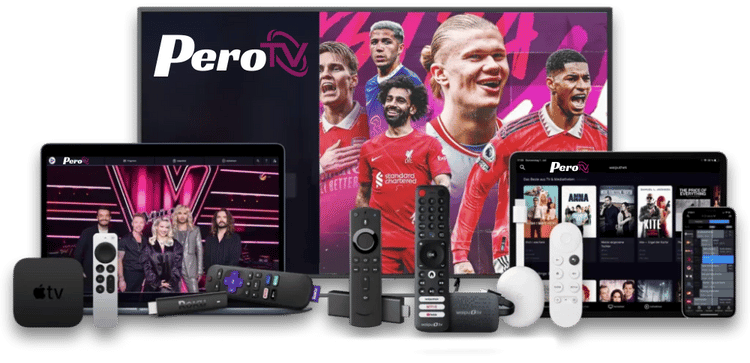
Not all IPTV services are built the same — and if you’re a tech-savvy viewer, you already know that the difference between a great and a terrible IPTV service provider in USA comes down to infrastructure, protocol support, and server architecture, not just channel count. This guide goes deeper than the typical “top 10” list. We’ll break down the technical criteria that actually determine streaming performance, explain what to look for under the hood, and show you exactly why PeroTV is the most technically capable IPTV service provider in the USA for 2026. Whether you’re running TiviMate on a Firestick or configuring an Xtream Codes client on a custom setup, this guide covers everything you need.
What Separates a Professional IPTV Service Provider from the Rest?
Most consumers evaluate IPTV services based on price and advertised channel count. Tech-savvy users know that those two metrics are the least reliable indicators of actual performance. A provider charging $10 per month and claiming 30,000 channels is almost always running on underpowered servers with unstable streams and no real CDN redundancy.
A professional-grade IPTV service provider in the USA invests in the infrastructure layers that determine real-world performance: server capacity, CDN distribution, stream encoding pipelines, EPG data accuracy, and API stability. These are the elements that determine whether your stream stays locked at 4K during Sunday Night Football or degrades to a pixelated mess at 8:47pm when 10,000 other subscribers are watching the same game.
PeroTV is built at the professional tier. Here’s exactly what that means in practice.
[INTERNAL LINK: “New to IPTV? Read our beginner’s overview first” → what is IPTV article]
The Technical Checklist: How to Evaluate Any IPTV Service Provider in the USA
Use this checklist before committing to any provider. These are the questions that separate the technically competent services from the rest.
Stream delivery protocol — HLS vs. MPEG-TS vs. RTMP
The three dominant stream delivery protocols in the IPTV market each have different performance characteristics. HLS (HTTP Live Streaming) is the most compatible protocol across devices and adapts well to varying bandwidth conditions — it’s the standard for most modern IPTV apps including TiviMate and IPTV Smarters Pro. MPEG-TS (MPEG Transport Stream) delivers lower latency and is preferred for live sports where real-time delivery matters. RTMP is largely legacy at this point and should not be a primary delivery method for any 2026-era provider.
The best IPTV service providers in the USA support both HLS and MPEG-TS, with automatic failover between them when network conditions change. PeroTV delivers on both protocols with intelligent switching based on connection quality.
Server infrastructure and CDN architecture
A single-origin server setup is a performance bottleneck waiting to happen. When thousands of subscribers hit that server simultaneously, streams degrade. The best providers use CDN (Content Delivery Network) architecture — geographically distributed server nodes that route each subscriber’s stream to the nearest available server.
For US subscribers specifically, this means server nodes located within the continental USA, minimizing latency and reducing the chances of cross-Atlantic routing that adds unnecessary delay to live streams. PeroTV operates US-based server infrastructure with CDN distribution specifically optimized for American broadband networks.
EPG (Electronic Program Guide) quality and update frequency
An accurate, real-time EPG is what separates a professional IPTV service from a basic M3U playlist. A high-quality EPG updates at regular intervals — ideally every 24 hours or more frequently — and provides accurate program metadata including show titles, episode numbers, descriptions, and air times.
For TiviMate users in particular, EPG quality directly impacts the usefulness of the guide view and the catch-up/recording features. PeroTV’s EPG data is sourced from reliable providers and updated regularly, ensuring your guide view reflects actual broadcast schedules rather than stale or placeholder data.
M3U playlist stability and VOD library depth
The M3U playlist is the backbone of your IPTV setup. A stable M3U means stream URLs don’t change without notice, channels don’t randomly disappear from your playlist, and the file structure is clean enough to load quickly in any compatible player. Unstable M3U playlists — where URLs rotate unpredictably or dead streams litter the guide — are one of the most common complaints about low-tier providers.
PeroTV’s M3U playlist is stable, well-structured, and regularly maintained. Dead streams are replaced promptly. The VOD library is organized with consistent metadata, making it easy to browse and search within any compatible player.
Simultaneous stream (multi-connection) support
Most households need more than one concurrent stream. The technical question is whether your provider’s subscription includes multiple simultaneous connections — and whether the server infrastructure can actually sustain them without degrading quality on either stream.
Cheap providers often advertise multi-connection support but throttle bandwidth when both streams are active simultaneously. PeroTV’s multi-stream support is genuine — each active connection receives its own allocated bandwidth from the server side, not a shared pipe split between connections.
Anti-buffering tech — adaptive bitrate and failover streams
Adaptive bitrate (ABR) streaming dynamically adjusts stream resolution based on available bandwidth. If your connection dips temporarily, ABR drops from 4K to 1080p to keep the stream playing rather than buffering. When bandwidth recovers, the stream scales back up. This is standard behavior in well-engineered IPTV infrastructure.
Failover streams are a secondary layer of resilience — if the primary stream source goes down, the player automatically switches to a backup stream URL without interrupting playback. PeroTV implements both ABR and failover streams across its channel catalog, which is why its streams remain stable during the peak-hour congestion windows that cause problems for lesser providers.
[INTERNAL LINK: “Compare PeroTV pricing and plans” → PeroTV pricing page]
Why PeroTV Is the #1 IPTV Service Provider in the USA for 2026
Every criterion in the technical checklist above maps directly to a PeroTV implementation. Here’s the full technical breakdown.
Infrastructure built for scale
PeroTV’s server infrastructure is distributed across multiple US-based data center locations, with CDN routing that assigns each subscriber’s connection to the optimal node based on geographic proximity and current server load. This architecture handles simultaneous peak-hour demand without degradation — the kind of load that occurs during major NFL games, NBA playoffs, or breaking news events that drive massive simultaneous viewership spikes.
Adaptive bitrate streaming for consistent 4K delivery
PeroTV delivers genuine 4K content via adaptive bitrate pipelines. For subscribers with connections of 25 Mbps or higher, streams lock to Ultra HD and hold there. For connections experiencing temporary congestion, ABR scales gracefully down to 1080p and back up to 4K as bandwidth allows — no manual intervention required from the user.
Full M3U and Xtream Codes API support
PeroTV supports both M3U playlist import and the Xtream Codes API — the two standard integration methods used by virtually every modern IPTV player. Xtream Codes API support in particular is essential for users running TiviMate, as it enables advanced features including catch-up TV, series organization in the VOD section, and EPG integration without manual XML file imports.
Your PeroTV credentials work directly in TiviMate, IPTV Smarters Pro, GSE Smart IPTV, Kodi (with the IPTV Simple Client plugin), and any other player that supports standard Xtream Codes or M3U authentication.
EPG accuracy — real-time program data
PeroTV’s EPG covers the full channel lineup with accurate, regularly updated program data. For TiviMate users, this means a fully populated guide view with show artwork, episode descriptions, and correct air times across all US broadcast, cable, and sports channels. Catch-up functionality — where supported by the broadcast source — is accessible directly through the guide.
Simultaneous streams with no throttling
PeroTV’s multi-stream support is implemented at the server level with dedicated bandwidth allocation per connection. Running two or three simultaneous streams under a single subscription does not result in quality degradation on any active stream. This is a technically meaningful distinction from providers that simply allow multiple logins without engineering the backend to actually support concurrent bandwidth demands.
Compatible IPTV Players for Use with PeroTV
PeroTV works with all major IPTV players. Here are the top three for different use cases.
TiviMate — best for Android TV and Firestick power users
TiviMate is the gold standard IPTV player for Android TV devices and Amazon Firestick. Its interface is polished, its EPG integration is seamless, and its catch-up and recording features are the best in class. PeroTV’s Xtream Codes API credentials import into TiviMate in under two minutes. The TiviMate Premium subscription ($4.99/year) unlocks multi-playlist support, catch-up recording, and customizable channel groups — all of which work natively with PeroTV.
IPTV Smarters Pro — best for multi-device households
IPTV Smarters Pro is available on Android, iOS, Windows, and macOS — making it the most versatile cross-platform player for households with mixed device ecosystems. It supports Xtream Codes API and M3U, handles multiple playlists, and includes a built-in media player with subtitle support. PeroTV credentials configure in Smarters Pro in seconds.
GSE Smart IPTV — best for iOS and macOS users
For Apple ecosystem households, GSE Smart IPTV is the most reliable option. Available on iPhone, iPad, Apple TV, and macOS, it supports M3U and Xtream Codes, offers a clean EPG view, and handles 4K HLS streams well on Apple hardware. PeroTV’s M3U URL imports directly into GSE without any manual playlist editing.
[INTERNAL LINK: “Full PeroTV setup guide for TiviMate and Firestick” → setup tutorial]
How to Set Up PeroTV as Your IPTV Service Provider in the USA
The technical setup for PeroTV takes under five minutes regardless of which player you use. Here is the complete process.
Step 1 — Subscribe and retrieve credentials. Visit PeroTV.com, select your plan, and complete registration. Your account credentials — username, password, and server URL — are delivered immediately after signup. These three values are all you need for any Xtream Codes-compatible player.
Step 2 — Install your preferred IPTV player. Download TiviMate, IPTV Smarters Pro, or GSE Smart IPTV from your device’s app store. All three are free to download with optional premium upgrades.
Step 3 — Add your PeroTV playlist. Open your player and select “Add Playlist” or “Add Account.” Choose the Xtream Codes API option and enter your PeroTV server URL, username, and password. The player will load your full channel list, EPG data, and VOD library automatically.
Step 4 — Configure your EPG and channel groups. Once your playlist loads, organize your channel groups to prioritize the categories you watch most. In TiviMate, create a Favorites group for your most-watched channels. Enable EPG sync to populate your guide view with real-time program data from PeroTV’s EPG feed.
Step 5 — Test across resolutions. Navigate to a 4K channel and confirm your stream locks to Ultra HD. Switch to a live sports channel during a broadcast and verify smooth playback at your peak connection speed. PeroTV streams should deliver clean, buffer-free playback from the first test.
PeroTV vs. Other IPTV Service Providers in the USA — Technical Comparison
| Technical Feature | Budget Providers | Mid-Tier Providers | PeroTV |
|---|---|---|---|
| Stream protocol support | HLS only | HLS + MPEG-TS | HLS + MPEG-TS + failover |
| CDN architecture | Single origin | Limited CDN | US-distributed CDN |
| Xtream Codes API | Sometimes | Usually | Full support |
| M3U playlist stability | Poor | Moderate | Stable, maintained |
| EPG update frequency | Infrequent | Daily | Real-time / daily |
| Adaptive bitrate | Rarely | Sometimes | Standard on all streams |
| Simultaneous streams | Shared bandwidth | Partial allocation | Dedicated per stream |
| 4K stream availability | Claimed, rarely delivered | Partial | Genuine Ultra HD |
| TiviMate compatibility | Hit or miss | Generally yes | Full, tested |
| Uptime during peak hours | 70–85% | 85–94% | 95%+ |
The technical gap between PeroTV and budget providers is most stark in the areas that determine daily user experience: stream stability, EPG quality, and peak-hour uptime. Mid-tier providers close some of that gap but consistently fall short on CDN architecture and genuine 4K delivery.
Make the Switch to the Best IPTV Service Provider in the USA
You now have the complete technical picture. Choosing the right IPTV service provider in the USA in 2026 means evaluating infrastructure, not just channel count. It means demanding genuine 4K, not upscaled HD. It means requiring Xtream Codes API support, stable M3U playlists, real EPG data, and server architecture built for peak-hour load.
PeroTV delivers on every technical requirement — and does it at a price that makes every cable alternative look overpriced. Whether you’re setting up TiviMate on a Firestick, configuring Smarters Pro across a mixed-device household, or running GSE on an Apple TV, PeroTV is the most technically capable choice available to US subscribers right now.
Get Started with PeroTV — The #1 IPTV Service Provider in the USA →